Wood Burners vs Bioethanol Fireplaces: Updated 2026 Comparison Guide

Key takeaways:
When trying to decide between wood burners vs bioethanol fireplaces, you’ll need to consider the installation and maintenance requirements, the running costs, and the environmental implications of each type of fireplace. While wood burners do offer high heat output and that traditional fireside aesthetic, they now come with much tighter regulations and are more expensive to install and maintain. Bioethanol fireplaces, however, give you that real flame experience with none of the hassle – making them one of the most practical wood burner alternatives available.

There’s nothing quite like sinking into your sofa and getting cosy in front of real flickering flames on a cold evening. But if you’re thinking of purchasing a new fireplace, you need to look beyond the aesthetics and consider how eco-friendly the fireplace is, whether it will work in your home, and if future regulations could restrict how you use it.
Below, we cover everything you need to know about wood burners vs bioethanol fireplaces, so you can choose the right fire for your home and lifestyle.
Wood burners: the traditional favourite

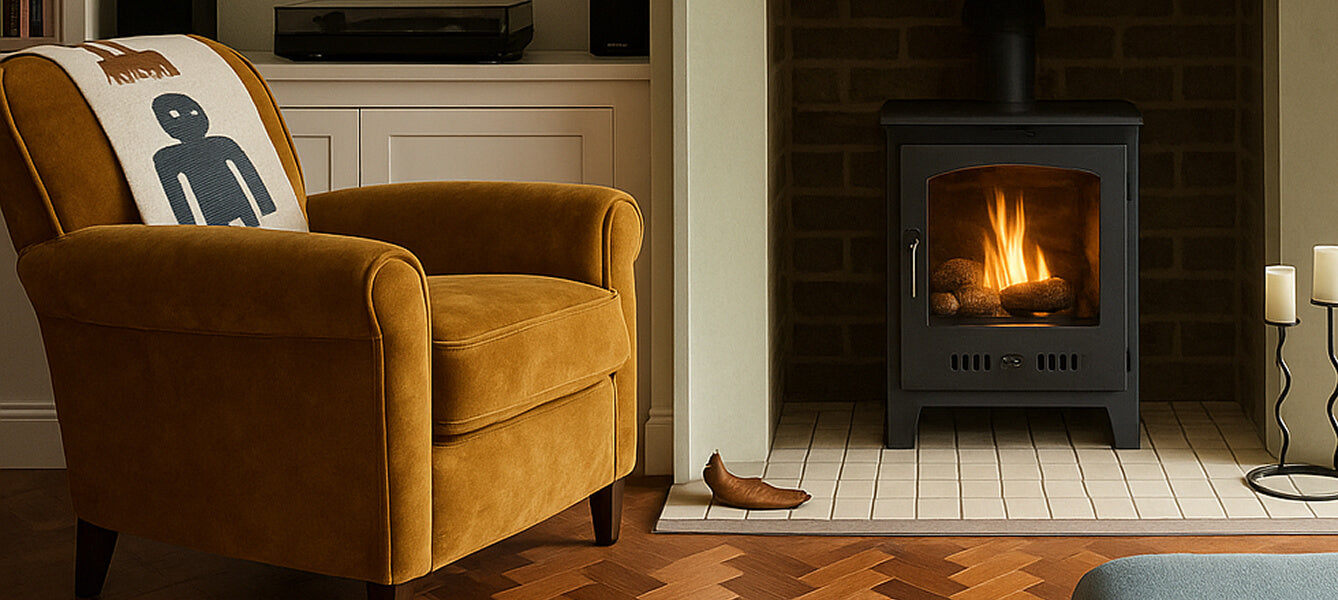
Wood-burning stoves have been around for centuries, offering a traditional fireside aesthetic that feels right at home in period properties and rural settings.
Here are some of the top advantages of wood burners:
High heat output – wood burners can generate significant heat (around 5kWh), making them a great option for large, open-plan rooms.
Classic ambience – the crackling of logs, the glowing flames, and the gentle smoky aroma create a cosy atmosphere that many of us know and love.
Wide design range – from cast-iron traditional stoves to sleek contemporary models, there’s a huge range of wood burner designs to choose from.
Fuel savings – if you have access to affordable logs then wood might be a cost-effective heating option for you, especially if you live in an off-grid location.
However, there are some drawbacks that you need to be aware of:
Strict regulations – there are many regulations you need to adhere to, and if you live in a smoke control area then you cannot use a wood burner at all. Our guide to the UK fireplace safety regulations explores this in more detail.
Requires a chimney or flue – if you don’t have a chimney in your home, then you’ll need to fork out on expensive structural work. This rules out wood burners for many flats, new-builds, and rental properties.
Maintenance heavy – you’ll need to pay for regular chimney sweeping and wood burner servicing, as well as removing ash and having somewhere to store your logs.
Heat loss – a surprising amount of heat actually disappears up the flue when burning, making them a lot less efficient than you might expect.
Bioethanol fireplaces: the eco-friendly, flexible alternative

Bioethanol fireplaces are one of the most popular eco fireplace options on the market, allowing you to experience the joy of real flames with none of the drawbacks of wood burners.
Here’s why a bioethanol fireplace could be the perfect option for your home:
Renewable fuel – these fireplaces run on eco-friendly bioethanol, which is made from plant by-products such as sugarcane and corn. The CO₂ released during combustion is reabsorbed during crop growth, making it effectively carbon neutral.
Clean, smoke-free burning – bioethanol produces no smoke, soot, or ash, making it safe to burn in smoke control areas.
No flue or chimney needed – because bioethanol doesn’t produce smoke, there’s no need to fork out on having a chimney or flue installed.
Easy to use – bioethanol fireplaces can be used straight out of the box and placed almost anywhere in your home. Simply fill, light, and enjoy!
Design flexibility – there’s a huge range of fireplace styles to choose from, including traditional wood burner-style models and modern minimalist designs.
However, bioethanol fireplaces do have a few disadvantages such as:
Moderate heat output – most models produce up to 3kWh of heat. This makes them an ideal top-up heating source, but they shouldn’t be relied on as a replacement for central heating.
Fuel cost – bioethanol can cost a little more litre-by-litre when compared with other fuels, but the overall running costs are cheaper than wood burners.
Burn time depends on use – a litre of bioethanol fuel typically burns for at least 4 hours, so you’ll need to ensure you have enough fuel to cover your usage.
Room size – biofires should only be used in rooms that are at least 40m3. You can calculate this by multiplying the room height x length x depth.
Read more about the disadvantages of bioethanol fireplaces and how to combat these in our dedicated blog post.
Wood burners vs bioethanol fireplaces: a quick comparison
Feature |
Wood burner |
Bioethanol fireplace |
Heat output |
High (around 5kWh) |
Medium (around 3kWh) |
Installation |
Professional required |
Easy to install independently |
Chimney/flue |
Required |
Not needed |
Maintenance requirements |
High |
Minimal |
Eco impact |
High (concerns around smoke emissions) |
Very low |
Placement |
Restricted |
Very flexible |
Why a bioethanol fireplace could be the perfect solution for your home

If you have a suitable chimney in your home and you enjoy the ritual of lighting logs, then a wood burner could still appeal to you. But if you live in an apartment, new build, or rental property, then a bioethanol fireplace could be more suitable. They’re the perfect wood burner alternative, delivering that same real flame feeling without any of the smoke, building work, or maintenance to worry about.
At imaginfires, we offer a fantastic selection of bioethanol fireplaces to suit all styles of homes. Complete your fireplace order with our false flues, ceramic logs, and pebbles – and don’t forget to stock up on our bioethanol fuel for a safer, cleaner burn every time!
Your burning questions, answered
-
Are bioethanol fires more eco-friendly than coal fires or woodburners?
-
Are log burners dangerous?
-
Is the flame on a bioethanol fireplace real?
-
How do I light a bioethanol fireplace?