Designed in the UK
FREE Delivery*
Flexible Payment Options
  • Designed in the UK
  • FREE Delivery*
  • Flexible Payment Options
Bring Your Old Fireplace Back to Life with Bioethanol

Bring Your Old Fireplace Back to Life with Bioethanol

My Custom Image
Author
Imaginfires
Updated
Categories

Key takeaways:

If you’ve got an old fireplace that’s been bricked up, tiled over, or is just being left unused, a bioethanol fire basket is one of the simplest ways to bring it back into use. imaginfires’ bioethanol fire baskets slot straight into your existing opening, helping to give your redundant fireplace a new lease of life. You don’t need to worry about opening up your chimney, arranging professional installation, or dealing with the ongoing hassle of smoke and mess. Simply place the basket into your existing opening, light it, and enjoy watching the real flickering flames. 

Bioethanol fireplace


Wondering what to do with an old fireplace? Would you love to bring it back to life again, but you’re worried about the cost and building work involved?

There’s actually a much easier and quicker solution to this problem that doesn’t cost thousands or require any structural work. That solution is bioethanol.

A bioethanol fire basket can bring real flickering flames back into your redundant fireplace opening in a matter of hours. Here’s how…

Unused fireplace ideas: what are your options?

If you’ve got an unused fireplace that’s been boarded up, tiled over, or is just sitting there looking sad and empty, there are several options to help bring it back to life again:

Woodburner

Reinstate your open fire or wood burner

This is the traditional route that many people take. It involves reopening the chimney breast, having it lined and swept, and then lighting real wood or coal fires as before. It gives you a “proper” fireplace back – but you’ll have to get the chimney swept regularly, and deal with the ongoing smoke and mess that comes with a live fire.

Leave it as a decorative feature

Some homeowners don’t want the hassle or expense of reinstating their fireplace or fitting an electric fire, so they just leave the opening as it is and style it with decorative items. It’s the option with the least effort – but your fireplace remains unused, and you’re still left with a big gap in your room to work around.

Choose a bioethanol fire basket

Bioethanol fire baskets give you real flames once again, without the need for any building work or professional installation. It’s an inexpensive option and they’re extremely easy to maintain, with no smoke or mess to worry about. They slot straight into your existing fireplace opening and can be used immediately – simply unpack it, position it in your opening, and light. More on this below.

Electric fireplace

How to convert your fireplace to bioethanol in 7 simple steps

Converting a fireplace to bioethanol is far quicker and easier than it sounds. Here’s what you need to do:

  1. Close off your chimney. If you still have an open chimney, close it off with a chimney sock or similar draught excluder. Then finish above the opening with a piece of fireboard for extra protection.

  2. Clear out the opening. Remove any old boarding, tiling, or debris in the opening. That way, you’re working with a clean and empty space.

  3. Measure the opening. Measure the width, height, and depth of the opening so that you know what size basket will fit.

  4. Choose your bioethanol fire basket. Pick a basket size and style that matches your measurements and the look you want for the room.

  5. Position the basket. Once your basket arrives, unpack it and slide it straight into the opening.

  6. Add your fuel and light it. Fill the fuel box with bioethanol and light it with a long lighter or match. You can use the adjustable slider to set the flame size.

  7. Add the finishing touches. Style your mantlepiece with your favourite decorative items and add some ceramic pebbles or logs around the fuel box to finish the look. Please note: decorative items should never be placed over the slot of the fuel box, but rather around this opening.

Electric fireplace

Give your old fireplace a makeover with our bioethanol fire baskets

At imaginfires, we offer a fantastic range of bioethanol fire baskets that bring real flames back to your unused fireplace. Here’s why you should choose our fire baskets:

  • Enjoy your fireplace surround once again, with real flickering flames at its centre

  • Fits straight into your existing opening, with no resizing, rebuilding, or new surround needed

  • Doesn’t need a chimney a flue, so you can keep your existing one closed off

  • Easy to install yourself – simply unpack the insert, slide it into the opening, and light

  • No smoke or ash to worry about, so that your existing hearth continues looking its best

  • Independently tested to BS EN 16647 with a ‘no-spill’ fuel box, making it completely safe to use in your living space

Ready to resurrect your old, unused fireplace? Explore our range of bioethanol fire baskets to find the perfect fit for your space.

Your burning questions, answered

  • Can bioethanol fireplaces be used in a traditional fireplace insert?

    Yes, you can safely use a bioethanol insert for a Victorian fireplace with the right modifications and professional guidance. This modern conversion lets you enjoy the charm of a period fireplace without smoke, soot, or chimney maintenance.

    Converting a Victorian fireplace using a bioethanol insert creates a clean, eco-friendly heating solution that preserves the traditional look while eliminating the need for wood or gas. Here are some important considerations:

    How to Convert a Victorian Fireplace for Bioethanol Use

    • Consult a Professional: It is crucial to consult with a professional fireplace installer or technician who specialises in bioethanol fireplace conversions. They will assess the feasibility of the conversion, ensure compliance with local regulations, and address any safety concerns.
    • Ventilation and Chimney Compatibility: Adequate ventilation is essential when using a bioethanol fireplace. The chimney and flue of the traditional fireplace should be properly inspected and modified, if necessary, to accommodate the different ventilation requirements of a bioethanol fireplace.
    • Firebox Conversion: The existing firebox of the traditional fireplace insert may need to be modified to accommodate a bioethanol burner. This can involve removing or adapting the existing grate and ashpan to create space for the bioethanol burner.
    • Safety Features: Bioethanol fireplaces should be equipped with safety features such as flame snuffers and fuel spillage prevention mechanisms. These features help enhance safety and control potential risks associated with the use of bioethanol fuel.
    • Regular Maintenance: Proper maintenance and cleaning of the bioethanol fireplace and chimney are crucial for safe and efficient operation. Follow the manufacturer's instructions for regular maintenance tasks, such as cleaning the burner and checking for any signs of wear or damage.

    If you are considering converting your traditional fireplace into a bioethanol fireplace, it is important to consult a professional fireplace installer who can guide you through the process and ensure compliance with safety regulations

    For more information on bioethanol fireplaces and related topics, you can explore our blog section, which provides valuable insights and helpful guidelines for fireplace conversions, bioethanol fireplace inserts and maintenance.

    Please note that each installation is unique, and it is important to follow the advice and recommendations of professionals who can assess your specific fireplace and provide personalised guidance for a successful conversion.

  • Will my bioethanol fireplace need professional installation?

    Not at all. Just place your fireplace where you want it, add fuel, and ignite. No tools, tradespeople, or building work required.

  • How does a bioethanol fire work?

    Bio ethanol fireplaces (also known as biofires) don't require chimneys or flues as the fuel burns without producing smoke or soot. The bioethanol fuel is poured into our double lined stainless steel fuel box (any spillages must be wiped away before lighting) and lit with a firelighter. The flame height can be adjusted by opening or closing the fuel box slightly. Once finished simply slide the shutter over the opening in the fuel box to extinguish the flame. It's that easy ! 

  • Do I need a flue or chimney with a bioethanol fireplace?
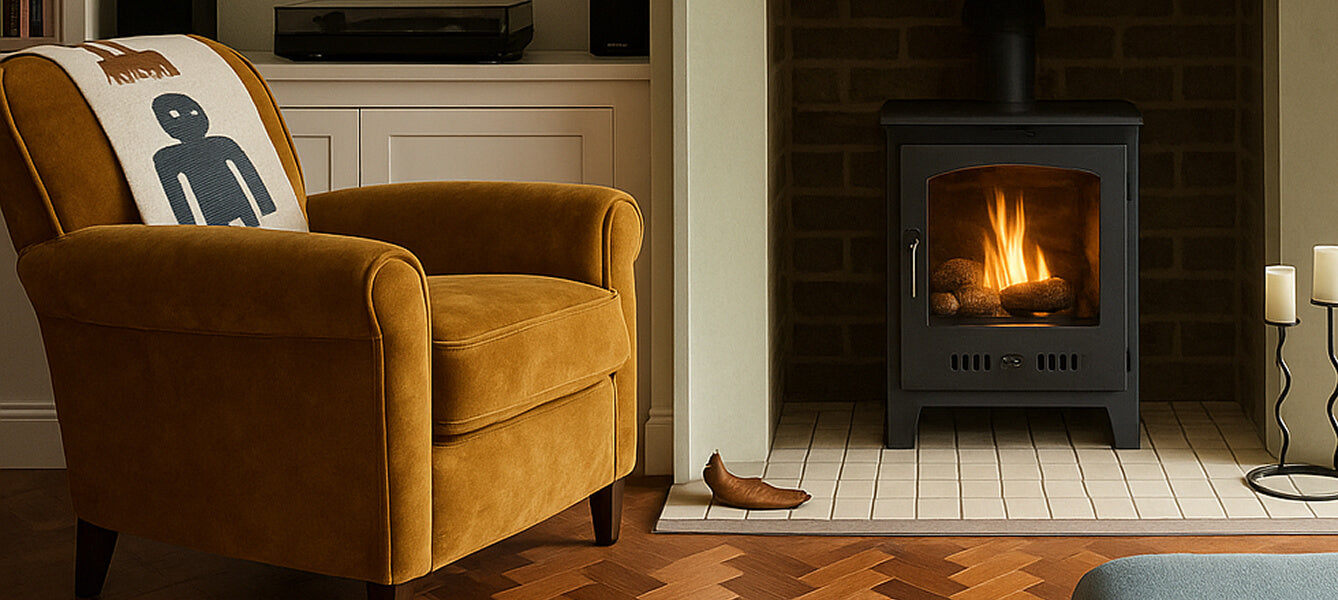
    Short answers are always nice, aren’t they? Do you need a flue or chimney with a bioethanol fireplace?

    No.

    Therefore, one of the most significant benefits of bioethanol fireplaces is their versatility. 

    You’re no longer constrained to gas or electric fires if you don’t have a chimney. And you can use a beautiful bioethanol fireplace anywhere - a house, a flat, a home office, a garage - basically, wherever you want to enjoy a cosy, warming flame. 

    And it won’t cost you a fortune to install your biofire

    In fact, installation is as simple as unpacking your biofire, placing it in your desired spot, and lighting it. Warm and cosy in less than an hour.

    Why don’t biofires need a flue or chimney?

    It sounds crazy, doesn’t it? A real flame and no flue or chimney. But it’s true. 

    Burning wood and coal produces smoke, soot, ash, and a LOT of mess. And wood and coal burning are heavily associated with air pollution in urban areas. 

    On the other hand, bioethanol fuel burns cleanly without polluting the air inside or outside of your home. And this means you don’t need a flue or chimney with a bioethanol fireplace — better for the environment and better for you. 

    Can I get a false flue for my bioethanol fireplace?

    Yes. We sell false flues that magnetically connect to the top of your biofire. The upper end of the flue curves to a right angle, making it look like your flue connects to the outside. 

    Of course, there’s no need for a flue with a biofire — but if you want that traditional woodburner look, complete it with a beautiful false flue. 

    What happens when you burn bioethanol?

    Bioethanol needs oxygen to combust, so it burns some of the oxygen in the room. This is why we recommend ensuring your room is ventilated — keep your internal door open to ensure airflow, or open a window every couple of hours if it’s feeling stuffy. 

    While it sounds a bit worrying that your fire uses oxygen in the room, it’s precisely the same with any fire: wood, coal, or bioethanol — they all produce flames that use up oxygen from the room. 

    What emissions do you get from burning bioethanol?

    We all know that wood and coal produce smoke, soot, and ash. These flames also send out tiny carcinogenic particles into the air, which can be health hazards, especially if you’re prone to respiratory problems. 

    However, the only emissions from burning bioethanol are:

    • Carbon dioxide — about the same amount as burning two candles
    • Water vapour — but you won’t notice it in the room. 

    That’s it. Just a little carbon dioxide and water vapour. 

    This makes bioethanol much safer and better for the environmentthan fossil fuels. 

    And your house plants will love it — they’ll absorb the carbon dioxide produced by your biofire and thrive!