The Best Alternatives to Traditional Fireplaces (Electric, Wood, Gas & Bioethanol Compared)

Key takeaways:
Traditional fireplace options all come with their downsides. Wood-burning stoves produce real flames, but they also emit smoke and require a chimney to use. Gas fires deliver reliable heat, but they require a gas connection and professional installation. Electric fireplaces are easy to fit and use, but they rely on LED effects rather than a real flame. Bioethanol fireplaces are the only fireplace alternative that gives you real, flickering flames without smoke, so you don’t need to install a chimney or pay for annual servicing to use one.

Want to enjoy the beauty of real flames, but don’t have a chimney or gas supply? Real flames can feel frustratingly out of reach if you live in a flat, new build, or rental property. Even if you don’t fall into these categories, you may not have the budget to pay for extensive building or installation work.
But the good news is that there are several fireplace alternatives to choose from, each with its unique strengths and limitations. Here’s a quick breakdown of your options, so you can choose the right one for your space.
A quick comparison of the most popular fireplace options

Wood-burning stoves and log burners
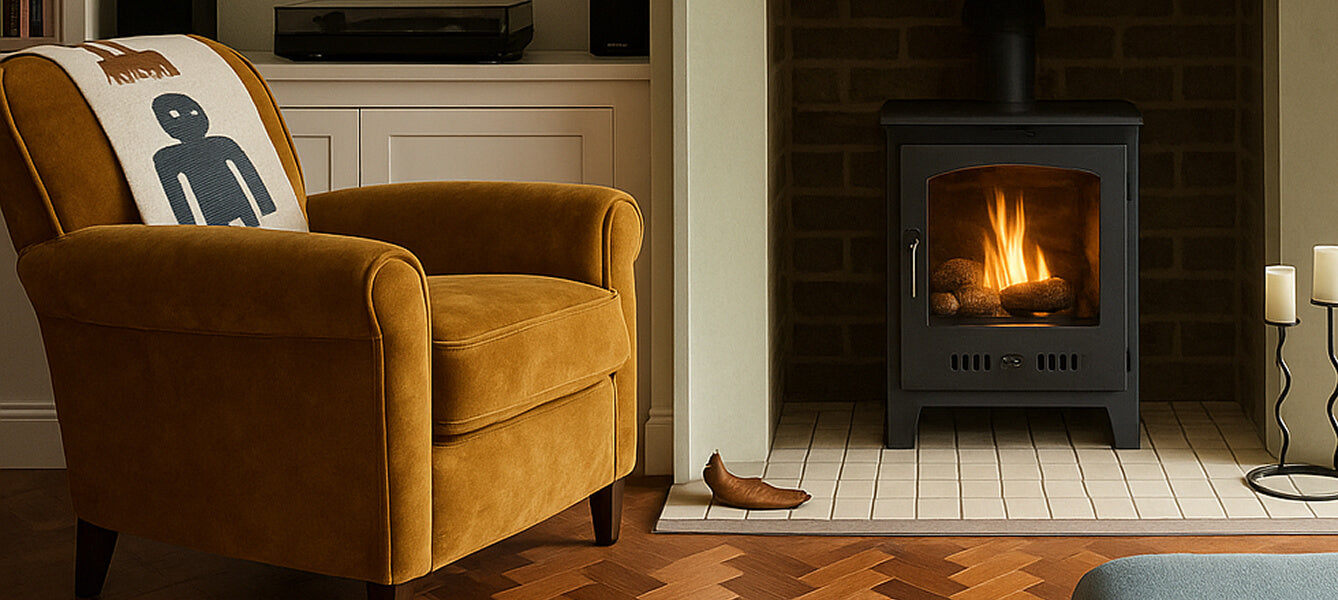
Do you love the idea of sitting beside a crackling log fire, watching the orange glow of the flickering flames and feeling the warmth on your skin? Wood-burning stoves give you that classic fireside feeling, and are the closest thing to an open fire that many of us can get. Unfortunately, they aren’t the easiest fireplaces to own and maintain.
Pros:
Gives you real flames with a classic fireside feel
Offers a strong heat output (5kW+), making them an ideal primary heat source
You can choose from a wide range of traditional and contemporary styles
Cons:
Produces smoke, which means you can’t use one if you live in a smoke control area
Requires a chimney or flue, which can be expensive to install (around £700 - £3,500)
High maintenance requirements, including chimney sweeping and ash disposal
Remains in one fixed place, so you can’t move it around your home

Gas fires
Gas fires are a popular choice if you want consistent heat output that you can easily control, without the mess or maintenance of solid fuel. Many modern models produce realistic flame effects, with remote controls or programmable timers that make them easy to use. However, they do require professional installation, which can be expensive and disruptive.
Pros:
Gives you a reliable, consistent heat output (usually around 3-5kW)
Quick and easy to use at the click of a button
Smokeless, so you don’t need to worry about disposing of ash
Cons:
Requires a gas connection and professional installation, which can be expensive (£500-£3,000)
You’ll need to pay for annual servicing
Remains in one fixed place, so you can’t move or reposition it
Not suitable if your home doesn’t have a gas supply

Electric fireplaces
Electric fireplaces are the most straightforward option to get up and running – simply plug in and you’re done. They’re easy to maintain and cheap to run, making them one of the most accessible fireplace alternatives out there. The biggest downside is that they don’t produce real flames, so they don’t give you the same ambience as a traditional fireplace.
Pros:
Quick and easy to install, with no chimney or gas connection needed
Little-to-no maintenance requirements, with no need for chimney sweeping or annual servicing
Cheap to run (costs 18-46p per hour to use)
Cons:
Doesn’t produce real flames, only an LED effect
The flame effect can look ‘fake’ and unconvincing on some models
Needs a power source to operate, so you can’t use it if your electricity goes out
Low heat output (usually 2kW), making them suitable for smaller rooms only

Bioethanol fireplaces
Bioethanol fireplaces are the only option that gives you real flames without the smoke, installation, or maintenance requirements. They’re ideal for use in flats, new builds, and rental properties where traditional fireplaces simply aren’t possible, bringing you that classic fireside ambience without the hassle.
Pros:
Brings the beauty of real flames into your home
Produces a consistent heat output (2-3kW)
Doesn’t require a chimney, flue, or gas connection to operate
Easy to install yourself – simply unpack, place into position, and light
Doesn’t produce smoke, which makes them suitable for smoke control areas
Flexible and portable, so you can move them around your home (and even outdoors) as you please
Runs on clean-burning bioethanol fuel, which is kinder to the environment than wood
Ideal for use in flats, new builds, rental properties, and homes that don’t have a chimney
Wide range of designs available, from traditional woodburner-styles to sleek, contemporary models
Cons:
They’re designed as a supplementary heat source only, not as a replacement for central heating
They cost a little more to run than an electric fireplace (roughly 78p per hour)
They should only be used in rooms of at least 40m³
Want to bring real flames into your home without the usual fuss? Browse our collection of bioethanol fireplaces to find the perfect model for your space.
Your burning questions, answered
-
Are bioethanol fires more eco-friendly than coal fires or woodburners?
-
How does a bioethanol fire work?
-
Do bioethanol fireplaces create smoke or soot?
-
Do I need a flue or chimney with a bioethanol fireplace?
-
Will my bioethanol fireplace need professional installation?