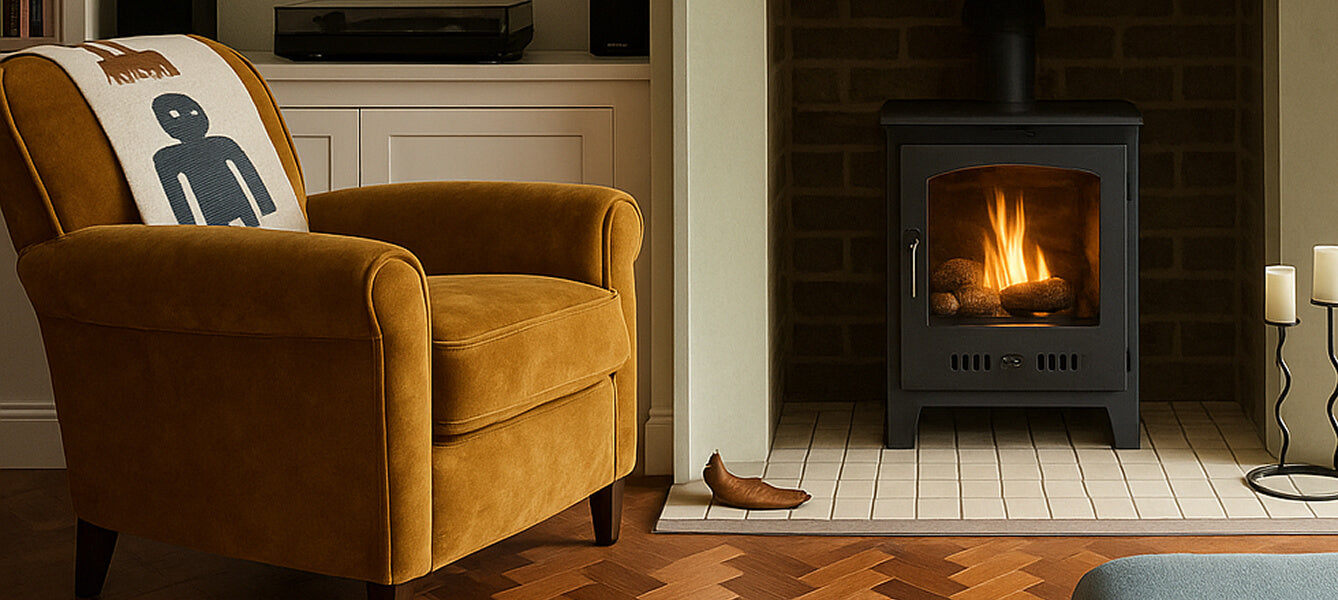
The Best Freestanding Fireplace Alternatives for UK Homes

In short:
Electric, gas, and wood-burning fires all come with their limitations – they’re either expensive to install, governed by strict indoor fire regulations, or don’t give that real flame ambience. Freestanding bioethanol fireplaces stand out as the best freestanding fireplace alternative out there. They give you all the joy of a real flame with none of the drawbacks, making them one of the most versatile fireplace options for all types of UK homes.

Always thought that a real fireplace just isn’t possible in your home? If you’re renting and can’t make permanent changes, or you own a home without a chimney and want to avoid costly building work, then traditional fireplaces can feel completely out of reach. But the good news is that there are freestanding fireplace alternatives out there that don’t require a chimney, gas connection, or ongoing maintenance to be able to enjoy the warmth and ambience of a real fire.
In today’s blog, we walk you through the most popular freestanding fire ideas in the UK, and explain why bioethanol has become the go-to choice for anyone who wants that real flame experience with none of the hassle of a traditional fireplace.
The most popular freestanding fire ideas in the UK
Freestanding wood-burning stoves
Wood burners remain a popular visual centrepiece, even in freestanding form. They emit plenty of heat and offer a traditional fireplace aesthetic that looks great in period homes and rural properties.
However, they do come with their fair share of drawbacks:
Freestanding woodburners require a flue or chimney to operate, and they must comply with strict indoor fire regulations.
If you live in a smoke control area, you’re not permitted to use a woodburner due to smoke emission concerns.
Even if you are allowed to use a woodburner in your area, you’ll need somewhere to store your logs, and you’ll need to regularly clean and maintain your fire – which makes them a lot less practical for renters or smaller homes.
To summarise: while woodburners do look appealing, they can be a bit of a headache to install and maintain.

Freestanding electric fireplaces
Electric fireplaces are one of the most accessible portable fireplace options out there. They plug into a standard socket, require no ventilation, and are safe to use in most living spaces.
Electric fires are a good choice if you want something convenient – but again, they do have some drawbacks:
The flame effect is artificial so you don’t get that sensory experience associated with a real fire (watching the natural movement of the flames, hearing the gentle cracking of wood, and feeling the gentle warmth on your skin).
They also don’t emit that much heat (usually around 1-2kWh, compared with around 5kWh for woodburners).
To summarise: although electric fireplaces are easy to install and require no ventilation, they lack the warmth and sensory experience of a real flame.

Freestanding gas fireplaces
Gas fires offer real flames and a high heat output. They work well in homes where a fixed gas supply and professional fitting are already in place.
However, freestanding gas models are far less flexible than they appear:
They require a fixed gas connection and professional installation, which immediately rules them out for renters.
Gas fires are also subject to strict regulatory requirements. They need to be inspected and maintained regularly to ensure they are operating safely (carbon monoxide is a key concern with these types of fireplaces).
To summarise: gas fires can work in some types of homes, but they’re difficult to install and maintain, which often makes them an impractical choice.

The best freestanding fireplace alternative: freestanding bioethanol fireplaces

Freestanding bioethanol fireplaces offer that cosy real flame feeling without the need for a chimney, flue, or gas supply. They run on bioethanol fuel and are clean-burning, so there’s no need to worry about smoke, soot, or ash polluting your home or the environment. And because of this, they require no maintenance apart from the occasional clean. However, we do recommend only using them in rooms that are greater than 40m3 (height X width X depth of room).
Bioethanol fireplaces are also one of the best portable fireplace options out there. They’re easy to install and many models can be used straight out the box, as well as being moved from room to room as you please. They can even be used outdoors to make your garden or patio area feel even more atmospheric on those balmy summer evenings. This makes them the best freestanding fireplace alternative for rented accommodation or flats/apartments where traditional fires simply aren’t possible.
Freestanding fireplace comparison
Fireplace type |
Installation required |
Real flame |
Vent/flue needed |
Ongoing maintenance |
Suitabilityfor renters |
Wood-burning fireplace |
Yes (professional installation) |
Yes |
Yes |
High (sweeping ash, chimney cleaning & fuel storage) |
Poor |
Gas fireplace |
Yes (gas connection & certification) |
Yes |
Usually |
Medium (servicing & safety checks) |
Poor |
Electric fireplace |
No |
No (flame effect only) |
No |
Low |
Good |
Bioethanol fireplace |
No |
Yes |
No |
Low |
Excellent |
Discover imaginfires’ range of freestanding bioethanol fireplaces

If you’re furnishing your rental accommodation, updating your apartment, or don’t want the hassle of installing a chimney, bioethanol could be the perfect freestanding fireplace alternative for your home.
At imaginfires, we offer an impressive selection of freestanding bioethanol fireplaces that give you all the benefits of real fire, with none of the drawbacks. Browse our freestanding models today and get ready to discover how effortless real flames can be!
Your burning questions, answered
-
Are bioethanol fires more eco-friendly than coal fires or woodburners?
-
Will my bioethanol fireplace need professional installation?
-
What is bioethanol fuel made of?
-
Is the flame on a bioethanol fireplace real?