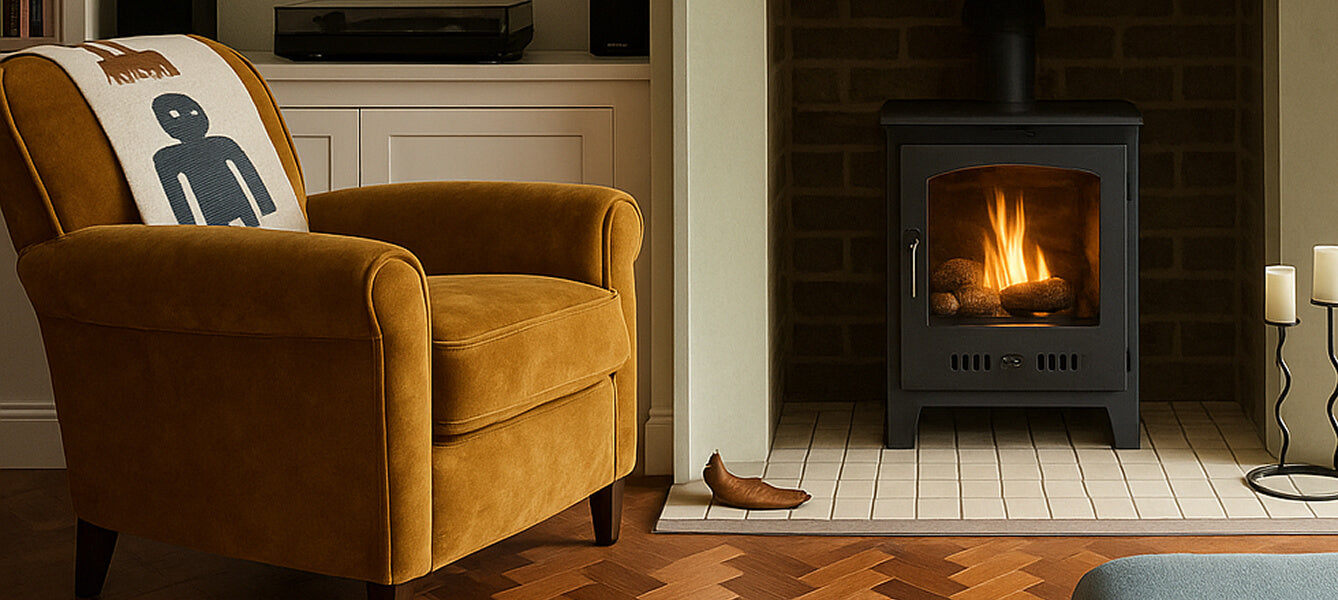
Why Switch from a Woodburner to a Bioethanol Fireplace?

The short answer:
If you have a woodburner, now might be the perfect time to switch to a bioethanol fireplace. As of June 2026, many UK towns and cities now fall within smoke control area regulations, which means you can’t legally burn wood at home without an approved exempt appliance. Woodburners are also expensive to maintain and difficult to clean, making them a less-than-convenient option to own. On the other hand, bioethanol fireplaces don’t produce smoke or soot and are legal to use anywhere in the UK. You don’t need to invest in annual chimney cleans or find somewhere to store your logs. imaginfires’ woodburner-style models give you all the benefits of a traditional logburner with none of the drawbacks, and you can even add a decorative flue to complete that classic woodburner look.
Is your woodburner costing you more than it should? The annual chimney sweeps, log storage, and regular cleaning can all add up, making your fireplace more hassle than it’s worth. And not to mention, much of the UK now comes under smoke control area regulations, making it illegal to burn wood in these areas.
Bioethanol fireplaces are quickly becoming the go-to woodburner alternative, giving you all the ambience of a traditional logburner without the maintenance, mess, or legal complications. Here’s why you should consider switching to bioethanol…
Bioethanol vs woodburners: three reasons why switching makes sense
Woodburners can’t be used in smoke control areas
If you live in a city or town, then there’s a strong chance that your address might fall within a smoke control area. Burning wood in these areas without an approved exempt appliance is now deemed a criminal offence, and you could receive a fine of up to £1,000 each time
You sidestep all of these rules with bioethanol fireplaces. They produce no smoke or harmful emissions, which makes them completely legal to use anywhere in the UK, including in smoke control areas. You can sit back, relax, and enjoy the real flickering flamens without any of the legal complications.
Smoke has a huge impact on air quality
The air quality implications of wood smoke are impossible to ignore. It contains tiny particles called PM2.5 that are linked to a range of health conditions. And the environmental picture is just as stark, with wood fires releasing pollutants that affect the air, soil, and habitats around us.
Bioethanol fireplaces are a much safer and greener alternative to traditional woodburners. Bioethanol burns cleanly, producing only water vapour and a small amount of carbon dioxide (similar to lighting a couple of tealights). You don’t need to worry about you or your family inhaling smoke, or contributing to any environmental damage.
Woodburners are difficult and expensive to maintain
Owning a woodburner is no easy feat. You’ve got to:
-
Pay for an annual chimney sweep (typically £60-£90)
-
Source and store logs somewhere in or around your home
-
Clean and dispose of ash regularly to keep the fire burning properly
And not to mention, you’ll need to mess around with kindling, newspaper, getting the fire lit, and tending to it every time you want to use it.
None of that applies with a bioethanol fireplace. You don’t need to waste time or money on sweeping a chimney, disposing of ash, or stacking and seasoning logs. All you need to do is fill the fuel box with our bioethanol fuel, light it, adjust the flame, and then close it where you’re done.
How to convert your woodburner to a bioethanol fireplace
It’s quick and easy to convert your existing fireplace recess into a bioethanol fireplace. And the best news is, you can do it yourself without having to hire a tradesperson. Here’s what you need to do:
-
Block off your chimney. You won’t need your chimney with a bioethanol fireplace, so block it off to stop any heat from escaping. You can use a chimney balloon or draught guard for a temporary fix, or get a dampener fitted if you want a permanent solution.
-
Remove the front glass (optional). If your existing woodburner has a glass panel, remove it to improve the airflow and heat output. Many of our bioethanol inserts include their own safety glass if you’d prefer to keep that look.
-
Clean out your fireplace. Remove any ash, soot, or debris from the firebox with a vacuum, and then scrub down the interior. This will ensure your new insert sits properly within the space.
-
Measure up your recess. Note down the internal width, height, and depth of your fireplace recess so you can choose the right sized insert. Remove the grate or ashpan if needed to get accurate dimensions.
-
Choose your bioethanol fireplace basket. Browse our range of bioethanol fireplace baskets to find the right style and size for your recess. Add some ceramic pebbles, decorative logs, or a false flue to complete that classic logburner look.
-
Install your biofire basket. Slide your chosen basket into the cleaned-out recess and add your accessories. Then, when you’re ready to use it, simply fill the fuel box with our bioethanol fuel and light it.
Ready to make the switch? Explore our collection of bioethanol fireplaces to find your favourite design.
Your burning questions, answered
-
Are bioethanol fires more eco-friendly than coal fires or woodburners?
-
Do bioethanol fireplaces create smoke or soot?
-
Will my bioethanol fireplace need professional installation?
-
What can you expect when burning imaginfires’ bioethanol fuel?